After years of having two JASCO zigbee metering switches controlling power to 2 HVAC blowers and gas furnaces, I decided to remove them due to persistent zigbee issues I traced back to Jasco products. Since I am trying to build out my Thread mesh network, and I already have replaced all switches/dimmers with Red and Blue devices, I opted for White switches for this application. I am already using White switches for the lights in 3 attic spaces.
First of all, let me state that I am aware my use case is not Inovelli approved as the switches are controlling blowers and are being used in a hot attic (Texas…) but I hope you can assist me with understanding why one works, and the other does not. Also, the Jasco switches worked just fine for years and I consider Inovelli switches definitely superior. I am also familiar with the process of determining the operating temperature of a device having worked for many years in a test & measurement company and electronics engineering + manufacturing.
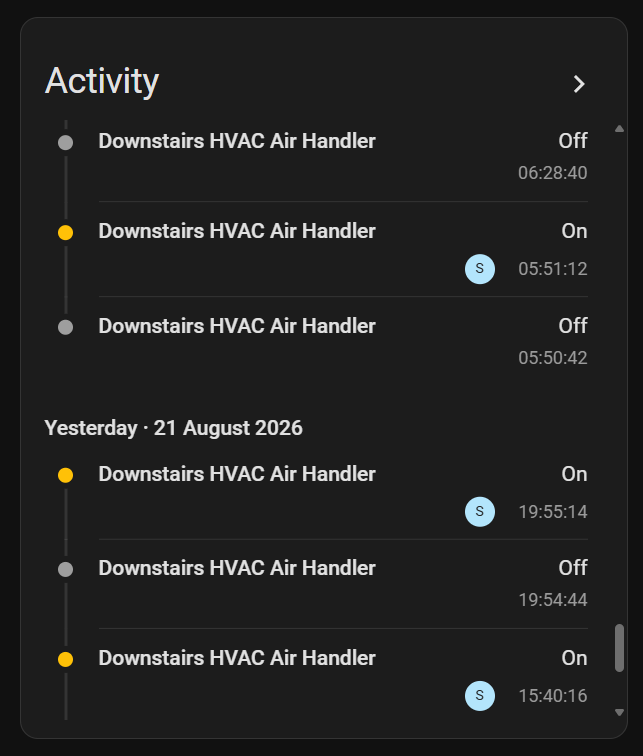
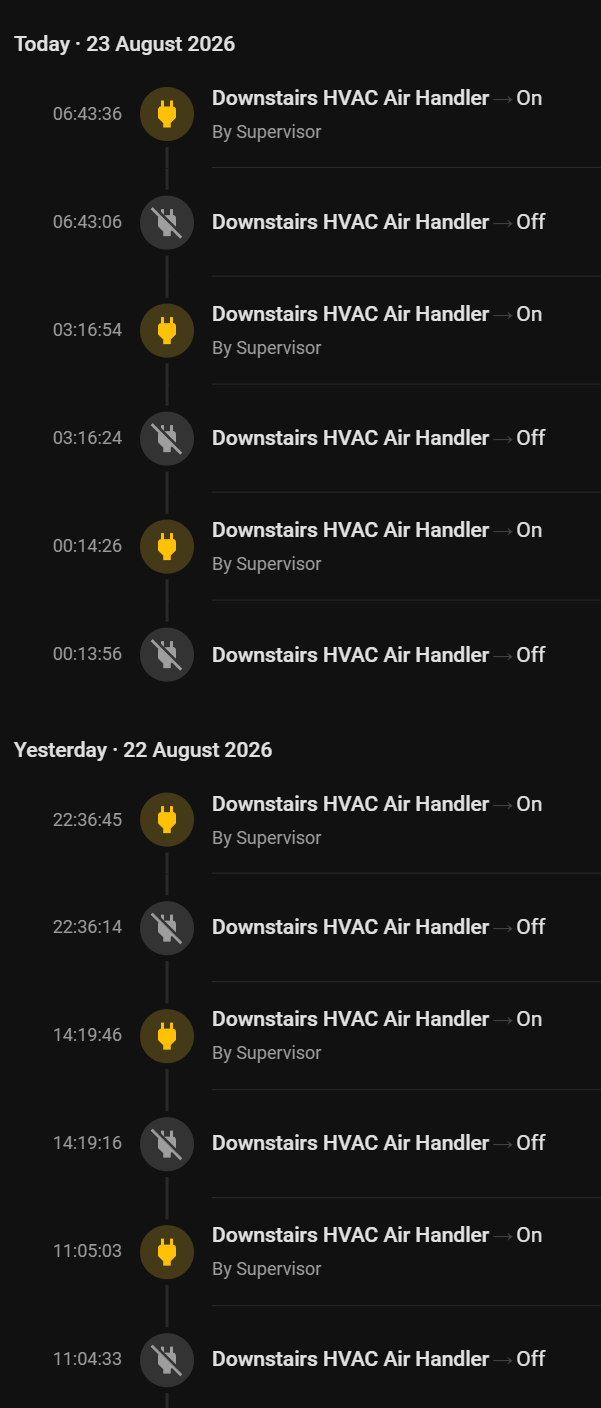
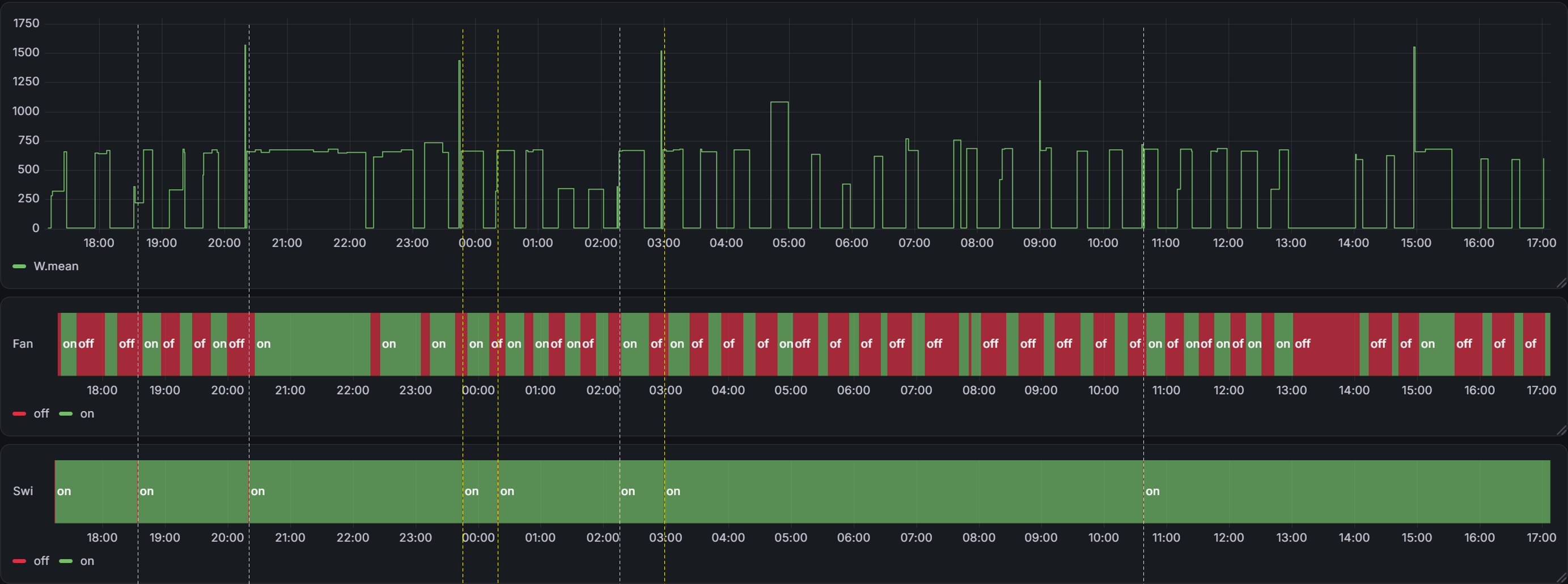
Issue - The VTM30-SN controlling the “Downstairs HVAC Blower” keeps rebooting, and doing so it turns off the load. I have an automation that waits 30s and turns it back on. Not sure why it stops having the issue after 8pm last night and started again this morning just before 6am:
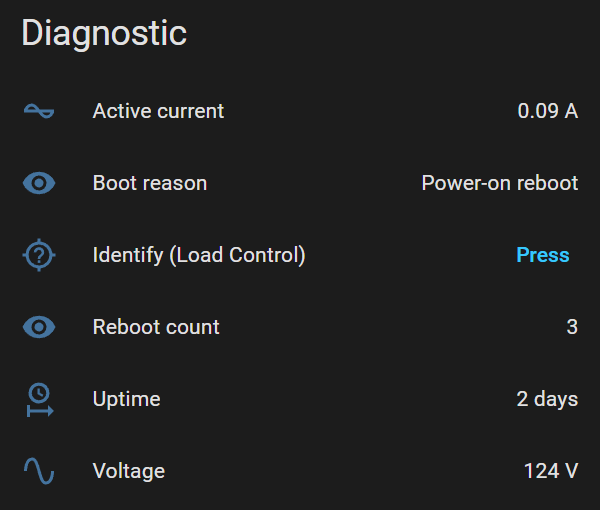
The boot reason is Power-on reboot and the Reboot count is 3 (doesn’t jive with the activity log, but I just enabled this in the UI).
The “Upstairs HVAC Blower” works fine. It shows the last Boot reason as Software reset and its count is also 3.
Both switches turn on their respective HVAC Blower & Gas furnace. The upstairs system draws 4A while the downstairs system draws 7A.
If this issue is related to the load, please tell me the nature of the issue and what can be done to resolve it. I am open to fairly complex solutions. System with issue has a larger blower so larger inductive load… I’ll try to correlate blower start/stop to reboot time. Maybe a filter on the blower to limit spikes?
If the issue is related to environmental temperature, then please tell me the max temp that the switch reports (given it’s internal) when it reaches its max. Also, my issue is happening in mid 20s C as well so likely not the issue.
Help would be greatly appreciated, even though “it’s not a supported use case” is likely a very tempting answer
As a dumb question this is a neutral installation as far as the VTM30 is concerned… correct?
I think that is the next step.
Also for testing it would interesting to know if you have the switch across the line as it is now but connect the line to the load (so the switch is not actually switching anything) if the switch still reboots.
If you leave one of the lights on in the area where the downstairs unit is does that reboot also?
Also if you have a good quality multi-meter with a “Min/Max” voltage feature and you are confident in setting it up it would be useful to know how low the line voltage is dropping when the AC starts up.
Tomorrow I should be able to correlate the blower on/off with the switch rebooting. It doesn’t appear to be the case but I have yet to spend enough time to make sure.
Both switches have a neutral however the builder ran 12/3 Romex to lower both systems so the neutral is shared. Given the phase difference, it is not an issue from a current perspective… but I hate they did that. It would be trivial to run another 12/2 if this were the cause… buf if it were, then I would expect both switches to have the same issue.
As my first troubleshooting test I ran the switch with both line and load wired up to line on the switch. The switch did not deboot lending to the theory that the load is the issue. To confirm this though, I need to swap the two switches to see if the issue stats with the load or follows the switch.
I have a 5 1/2 digit benchtop DMM with graphing, trending, logging that I could use to do the test you suggest so I can capture the voltage when the issue occurs. All my other DMMs are battery powered so not ideal for a test that could last hours unless I just check on the start up sag regardless of reboot.
The switches are in series with a manual shut off for servicing and are both in the same attic next to the two HVAC systems. There are no other loads on those switches.
I can’t recall with certainty but I believe I had weird rebooting issues with some of the other 3 whites switches that just switch LED lights in the 3 attic spaces. I believe the issues stopped after multiple resets / re-add. Memory on the issue is vague, and could have been unrelated as Matter/Thread support is still in its infancy and these 5 switches are also the beginning of my thread backbone.
Interesting that the activity log shows on/off but the diagnostic log doesn’t show an increase in reboot count. Maybe there is some malfunctioning in the switch causing it to randomly turn off in intervals of 3hrs or so?
@andrewk I switched to HA, after 7yrs on ST, 5 years ago nearly to the day. I outgrew ST and was forced out due to the 200 device limit… likely resolved by now but I’ll never go back.
"Power-on behavior (Load Control)" is set to on and other than turning on the switch after 30s when it turns off, there are currently no automations. The reason I have the switch is to get full power usage, and to be able to turn it off in the event of a smoke alarm / fire.
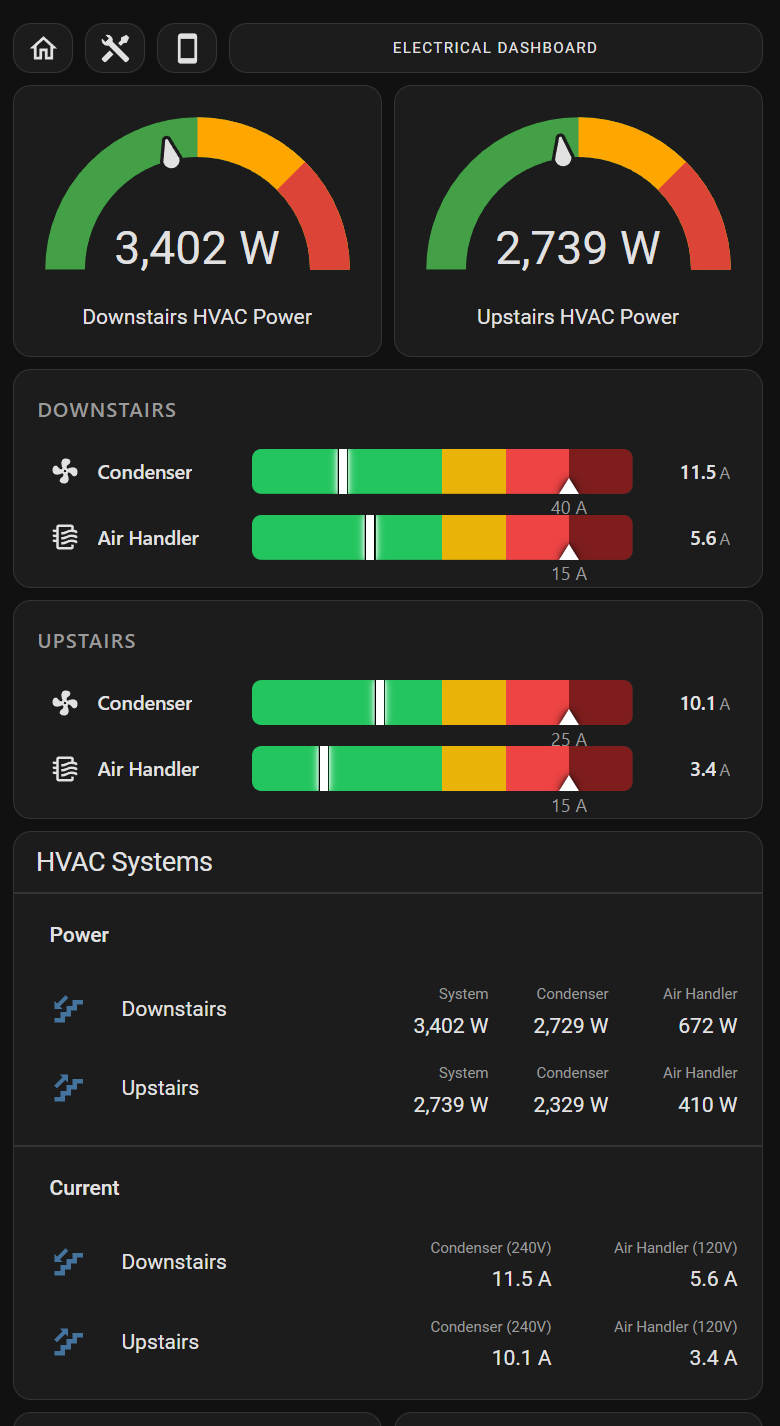
An Emporia Vue3 converted to ESPHome provides the outdoor units’ power, and the VTM30-SN provides the Air Handlers’ power. Below is the data:
The switches should be on 100% of the time unless there is a fire alarm. I have dumb toggle switches to turn the units off for servicing. The air handlers overlap all the time, but I could try to correlate them. Anyhow, if it were an issue of this type, would it not affect either switch?
I had ChatGPT review the last 10k lines of Matter Server log and it did not find issues with those switches.
This morning I will swap the 2 switches so see if the problem follows the switch or stays with the air handler… I think that will be revealing and will help focus on the cause.
Might be worth turning on the Current switch position (Down) and Current switch position (Up) diagnostics in HA. That way you can tell if the switch “thinks” the paddle has been pushed. You could also (for testing) put the switch in smart bulb mode which will essentially disable the paddle (the events will still be seen).
Might be a little early to say for sure, but after I swapped the two switches, the issue remained with the Downstairs HVAC Air Handler.
Now I need to figure out (haven’t had time yet) whether it happens when the blower in on, off or starting. Stopping unfortunately won’t be possible as the switch cuts power, but maybe if I see it happen after a long period with the blower on, I can assume it is a spike from the blower cutting off.
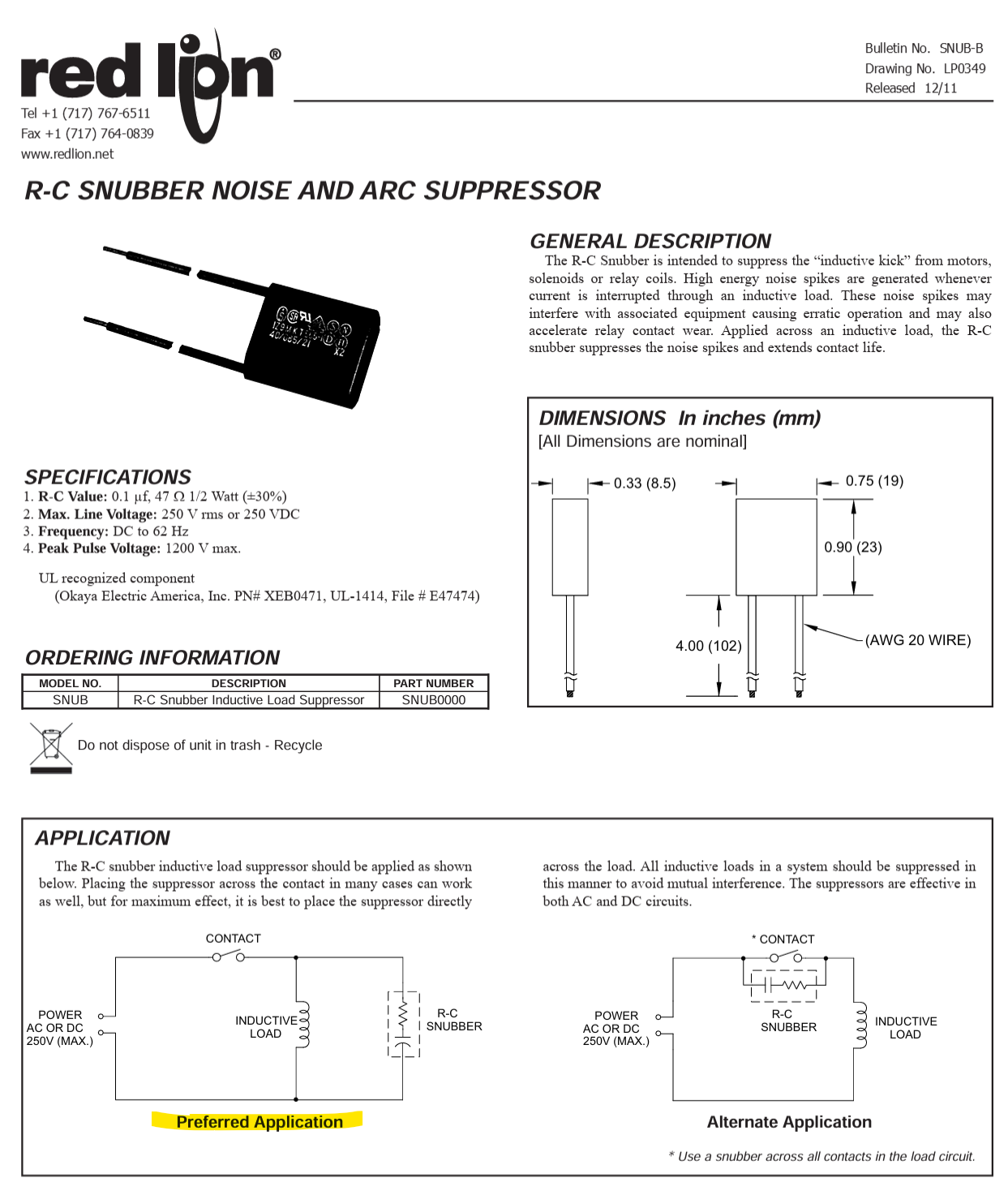
While most RC Snubbers use a 0.1uF + 100ohm resistor setup, I was having a hard time finding one for purchase that was trustworthy (UL listed) so I went with this one. I will have to add 2 as the preferred installation would have it connected between Neutral and the Hot of the motor, however my system uses 2 different motor windings depending on its mode (hot / cool). The only way to avoid needing 2x would be to install the snubber across N and L but that means it is always powered… and I’d rather not do that.
While this snubber might fix the issue, the more I look into this, the more it seems that something like the Shelly PRO EM-50 or Shelly EM Gen3 80А might be a better choice as they can control a contactor and measure power using a CT. Either one will require figuring out the “wall boxes” (actually just nailed to studs in the open) and wiring in the attic. I try to avoid “major” modifications of home systems (at least in the eyes of an HVAC tech, inspector, etc) so that if HA is ripped out or simply off, everything keeps working.
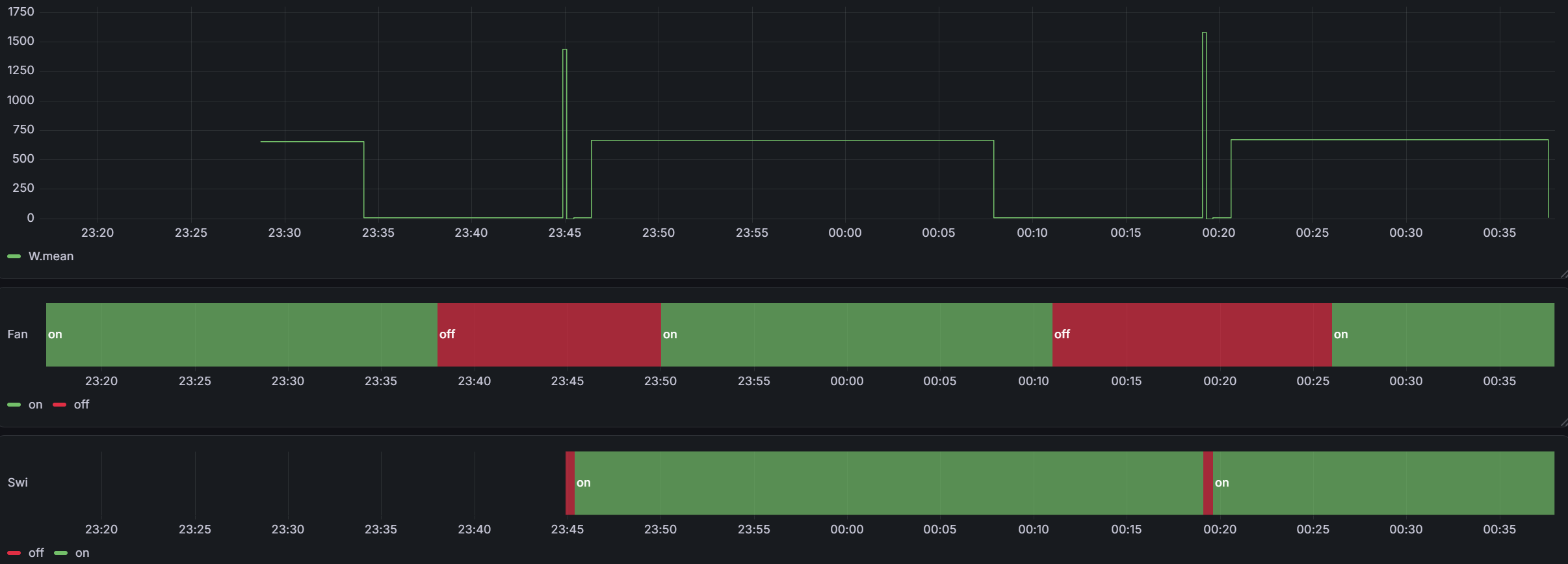
In-rush should happen when the blower turns on, and EMF when it turns off. In the two instances below there are two spikes that match when the switch turns off. The delay after that is the 30s for the switch to turn back on, and the time it takes ecobee to restore operation. I am surprised though that the switch is capturing the in-rush current (not consistently, and likely at a lower value than actual). I have a clamp on amp meter that measures in-rush (forgot I did) so I can try to measure that tomorrow morning.
If the issue is in-rush, the RC Snubbers I ordered will not help fix the problem… but they won’t hurt either.
The downstairs system is larger and therefore draws nearly twice as much power as the upstairs system which is likely why the issue is with the system, not the switch (I swapped them and issue stayed with downstairs system).
@andrewk - I had to give up on using the VTM30-SN because:
I installed RC snubbers directly on the blower motors, but the issue remained, although it does appear to be less frequent.
Both systems had bad blower motor capacitors. The one causing the most trouble had the capacitor in the worst condition. However, replacing them did not prevent the switch from tripping.
The larger system that is causing the switch to trip has an inrush current of 18 A, while its running current is about 8 A. The smaller system, which does not have any issues, has an inrush current of 8 A and a running current of about 4 A.
I am guessing the issue is related to spikes, electrical noise, etc. caused by the high inrush current, which may be affecting the electronics in the VTM30-SN. The switch may simply not be adequately protected for this type of load. Since this type of load is not officially supported, that is unfortunate, but not really an issue with the product itself.
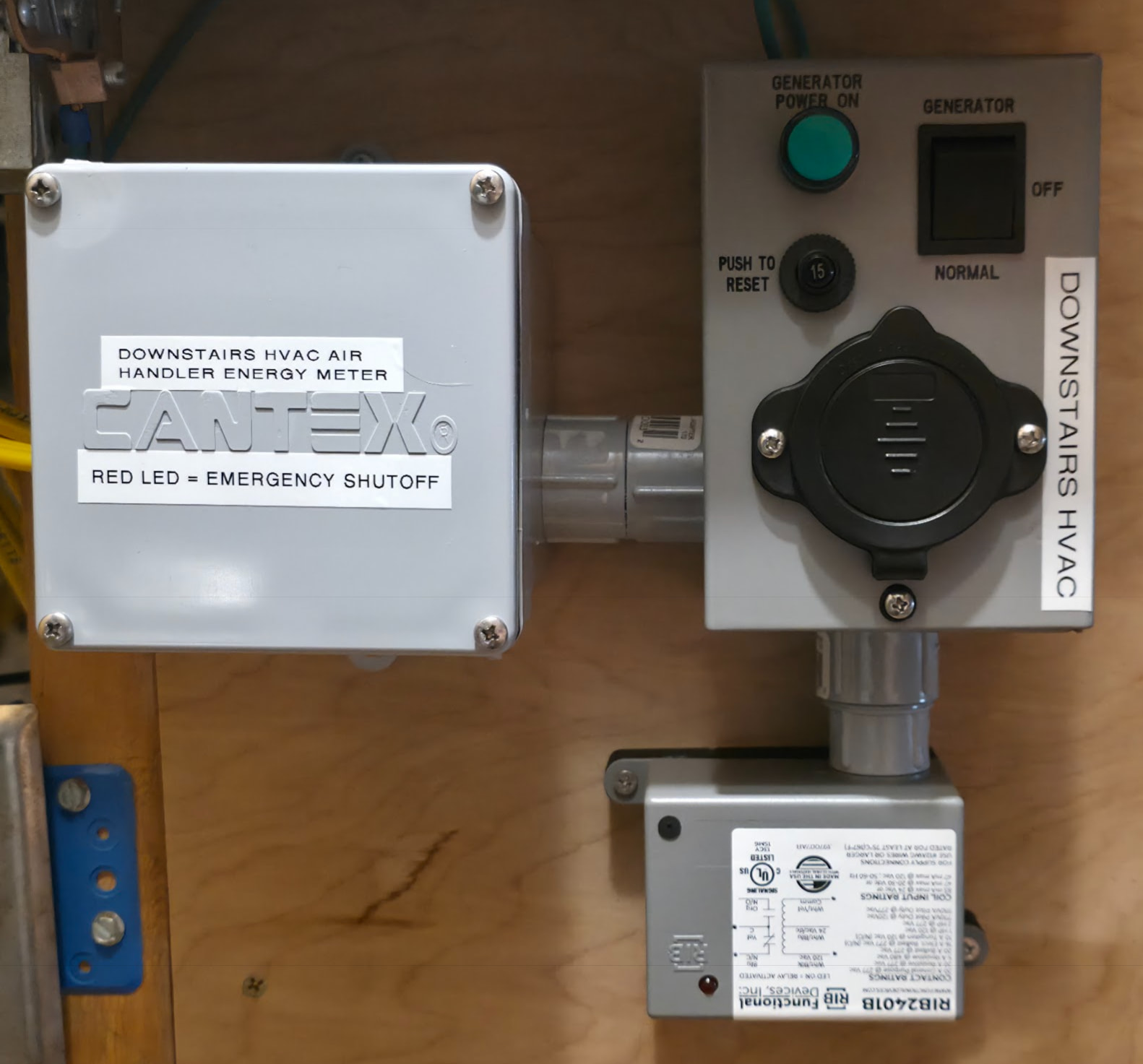
Today I installed the replacement: a Shelly EM Gen3 to measure power and energy using a CT, so it is not in the load path. The Shelly EM also has a 2A relay output that I use to energize the shutoff relay (47mA @ 120V). While I was at it, I also added a generator transfer switch so I can run the gas heating system during winter power outages. In 2021, I spent several days with the house at around 6°C because of the Texas grid failure.
The relay shown below the transfer switch will cut power to the air handler when energized. In the event of a smoke or CO alarm, the air handler will be shut down by energizing that relay. I configured it this way so the relay does not need to remain energized 24/7.