Zigbee + Matter/Thread Smart Smoke Alarm & Carbon Monoxide Detector | Project Nebula

Hey everyone!

Welcome to Project Nebula, our community development thread for the Zigbee + Matter/Thread Smart Smoke & Carbon Monoxide Alarm.

As with our other community projects, this thread will be the main place to follow development, share feedback, ask questions, and help shape the product as it moves from idea to reality.

I’ll keep this first post updated so it’s easy to see where things stand without having to dig through the full thread.

Project Team

I’ll be leading the project from Inovelli’s side and will be the main point of contact for overall product direction, requirements, timeline, and manufacturer coordination.

If you’re not sure who to tag, just tag me and I’ll get it to the right person.

Project Overview

Project: Nebula
Product: Zigbee + Matter/Thread Smart Smoke Alarm & Carbon Monoxide Detector
Protocol: Zigbee + Matter over Thread
Current Stage: Concept / Market Research
Current Goal: Gather community feedback and receive initial manufacturer timeline
Target Production: Tentatively Q3 (pending official timeline)

What We’re Building

Project Nebula is our attempt at building a smart smoke and carbon monoxide alarm that fits naturally into modern smart homes while still keeping life safety as the top priority.

One of the biggest reasons we’re exploring this product is because there has been a real gap in the market since the Google Nest Protect was discontinued. A lot of people loved that product, including Eric, and there really hasn’t been a clear replacement that offers the same kind of smart home appeal while also fitting well into enthusiast ecosystems.

Our goal is to create a smoke alarm and CO detector that combines strong core safety functionality with smart home integration, useful alerts, and thoughtful features that actually make sense in day-to-day use.

Current Design
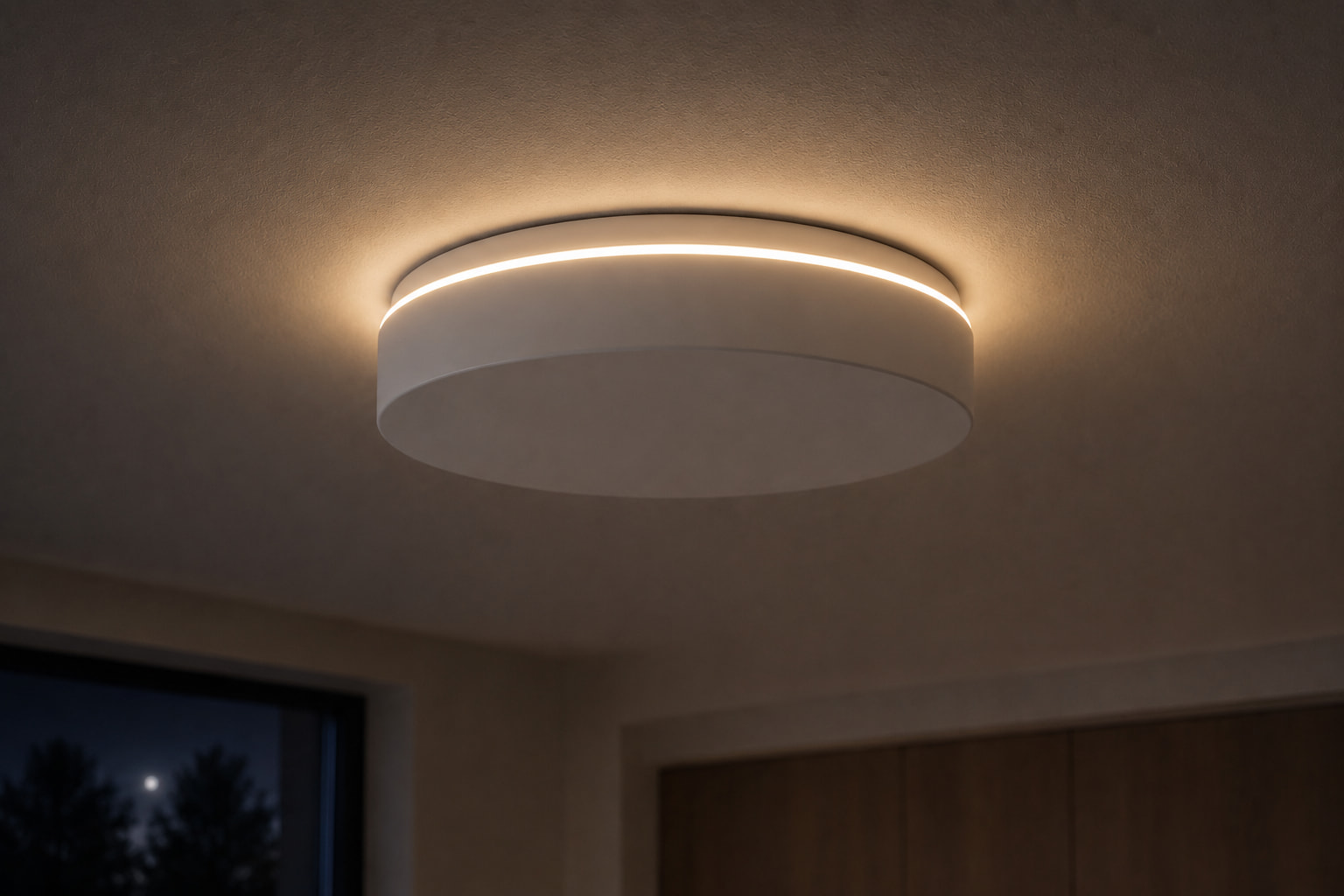
design subject to change

Core Requirements

These are the major requirements we’re currently designing around. As always, these may evolve as we move through engineering, feasibility review, and testing.

Hardware

  • Smoke Detection

  • Carbon Monoxide Detection

  • Zigbee + Matter over Thread Connectivity

  • AC Powered with Battery Backup

  • Backup Battery Preference: AA/AAA batteries if possible

  • Audible Alarm

  • Status / Notification LED Ring

  • Physical Test / Silence Control

  • Replaceable / Quick-Connect Mounting Base or Harness

  • mmWave Presence Sensing

  • Potential Additional Ambient / Safety Sensors (depending on feasibility)

Software / Smart Features

  • Smoke Alarm Status

  • Carbon Monoxide Alarm Status

  • Battery Status Reporting

  • Device Health / Fault Notifications

  • Test / Silence Status

  • mmWave Presence Reporting

  • Automation Triggers Based on Alarm State

  • OTA Firmware Updates

  • LED Configuration

  • Local Alarm / Event History

  • Safety-Oriented Smart Features

  • Matter Support for Alarm Functionality

What We’re Still Exploring

These are some of the areas we’re actively working through right now:

  • Interconnect Strategy: wired, wireless, or both

  • Additional feature ideas from the community

  • Best use cases for mmWave in a life-safety product

  • What smart features are truly useful vs. just “nice to have”

  • Final feasibility, architecture, and project timeline from the manufacturer

This is the part where your feedback can really help shape the direction of the project.

Community Feedback

This is the biggest thing we need right now.

We’d love to hear:

  • Is this a product you would actually want?

  • What features would be most important to you?

  • Are there any ideas or use cases you think we should explore?

  • What would make this stand out as a true replacement for products like Nest Protect?

Whether your feedback is about hardware, software, installation, automations, safety, or design, we want to hear it.

As always, not every idea will make Version 1, but community feedback often helps us uncover use cases and priorities we may not have considered.

Timeline

We are still waiting on the official timeline from the manufacturer, so I don’t want to post dates yet that may immediately change.

For now, the expected project flow looks like this:

Stage Status
Concept / Market Research In Progress
Community Feedback In Progress
Manufacturer Feasibility Review In Progress
Initial Timeline Release Pending
Industrial Design Upcoming
Engineering / Development Upcoming
Testing / Validation Upcoming
Certification Upcoming
Production Upcoming

Current Focus: We’re currently gathering community feedback while the manufacturer reviews our documents and works on the initial timeline.

Project Updates

I’ll post updates here as there’s meaningful progress to share.


Alright, let’s build this thing!

10 Likes

Awesome! Since this is so early in design phase, I’ll dump all my thoughts in. :slight_smile:

I believe the UL certification process will definitely take more time than your other products, but this could be really awesome. As a suggestion, for the smoke detection, please consider putting both ionization and photoelectric sensors in it. For some reason there aren’t many / any smoke/CO combo detectors that have both kinds of smoke detectors.

For interconnect, I’d guess that UL certification will be easier if it is wired, but having wired + wireless so they know which one actually set of the alarm) would be good.

I believe you’ll need to have two batteries, one non-replaceable one with a 10y maximum life for the detection capability, and a separate battery for the smart capabilities.

I can see uses for the mmWave sensor, but I also suspect it will be constrained because a lot of smoke detectors aren’t in an optimal location for sensing (right next to the door to the room, pointing straight down or sideways close to the ceiling). If the sensor could be aimed separately from detector placement that would help a lot.

If the current UL rules mean the Path Light feature the Nest Protects had can’t be used, please at least allow tuning the LED brightness to the minimum alllowable.

If allowed, on the Matter version, please allow it to delay battery chirping during a human sleep hour. 2am chirps really suck.

If monthly automatic self-testing is allowed (like the Nest Protect), please include that, but have some Zigbee / matter value that shows seconds to next test (so we can set HA alerts more than a minute before it’s going to go off and get the dog out so he doesn’t loose his mind every month).

5 Likes

First off - great name and excellent product idea filling a real hole. I just replaced 6x smoke detectors and it feels bad when the only smart option is the Ring one.

Having just made this purchase, here’s my thoughts:

  • Hardwired interconnect must be at least an option - a life threatening emergency is not a real great time to figure out the Zigbee radio is flaky.
  • This should be a great smoke/co detector with great smarts bolted on - not a great smart home product with great smoke/CO detection bolted on. A software hang in whatever RTOS is running on this thing shouldn’t leave the users vulnerable.
  • Would love mmwave presence sensing if it can encompass a wide enough “cone” to be useful
  • Intercom/speaker feature could be cool but absolutely not essential.
  • I’m preferential to hardwired + 10yr lithium battery, but I recognize the AA/AAA is nice too
2 Likes

Many states and local jurisdictions require hardwired interconnects for new construction or any remodels on existing construction. As someone with existing hardwired interconnects, I would not even consider a solution if it was missing that functionality.

I’ll also throw in the feature that it should talk. It’s so much more useful when it audibly screams Fire vs Carbon Monoxide and is much better at waking people up than the loud cryptic siren.

9 Likes

Agree that hardwired is basically a requirement at this point, although I think many states allow for wireless interconnect. However, for a life-saving safety product I would never purchase an interconnected system that didn’t offer a wired option. Toward this, I want to second the previous comment sentiment that these need to first be high-quality smoke & CO detectors with the smart home features as an added bonus.

Regarding batteries, I think all smoke detectors now have a finite lifespan of 10 years. Having to replace batteries when they could just come with a 10-year backup battery seems a little silly.

As you look into this more I suspect that to create a single product that meets code requirements in all 50 states will heavily constrain the design regarding many of these options.

I recently had FirstAlert smoke & CO detectors installed and really like the voice alerts. They can be labeled with a predefined set of room names which the smoke detector will say when it goes off. However, when the other alarms go off via the interconnect wire signal they aren’t able to say which room triggered the home alarm. Having the interconnect wire somehow also transmit the source room of the activation to the other alarms in the house would be awesome.

Also, why no Z-wave?

3 Likes

Love this!

If it has the same features as the Nest + Inovelli smarts, I’m all in! :smiley:

Need a silence button on the device.

Would be nice if a smart switch’s config button or tap configuration could also silence it.

Should have a speaker to speak instead of just beeping.

Mains power would be an issue for me in my kitchen - just did a full reno and never thought of adding a mains connector for smoke alarm! :face_with_spiral_eyes:

1 Like

I’m surprised you have a smoke detector in the kitchen. It’s generally recommended against (even with gas appliances) because of possibility of lots of false alarms.

1 Like

We get a warning from our Nest that it will alert soon if there is too much water vapour or some smoke from cooking. Pressing the button on its bottom resolves this. I’m tall enough to be able to press it, but for those that are not, having another option would be great!

1 Like

Surely not 2027, right? 2028?

A friend of mine had a scare when a gas burner on the stove was left on without being lit. I know there are sensors for this that can be wired into ESP32 boards, I wonder if they could be included in a unit like this.

1 Like

Double plus on the hardwired interconnect. I had to have it for new build, and I would not go back to not having it. It would be great if it spoke the “standard” interconnect protocol, so that I didn’t have to immediately replace all of my units with Inovelli.

I don’t know if UL rating allows it, but silencing through software would be amazing. Our ceilings are very tall, and without a very heavy ladder, my wife can’t even reach them, and it still takes a smaller ladder for me. For her to be able to silence via home assistant would be great.

1 Like

Interesting project! I’ll dump my thoughts in here as well:

  • Another vote that without hardwired interconnect, it’s an instant no-buy for my house.

  • I think the most important thing is being able to easily differentiate which detector is going off. I assume you could figure it out in the automation software somehow. But in an actual emergency, those seconds might not be available for you to fumble around with your phone (assuming your automation software isn’t impacted by the issue). So, having some clear indicator from the other detectors to help you figure it out would be nice.

    Like others have mentioned, there are detectors that speak. They let you select from like 10-20 room names, and when the detector in a room goes off, they all speak the room name (assuming interconnected). It doesn’t have to be speaking the room name, it could be something else. The important part is that from one place in the house, that might not be where you notice the issue, you can tell where the issue is.

  • Relatedly, a nice to have would be the ability to adjust the volume level. We got the First Alert’s that talk, and they’re painfully loud when they’re all talking at the same time. If we could adjust them to like half volume, they’d be not terrible (because you don’t need every one of them to speak at full volume when there’s one in nearly every room).

  • Put as many sensors in these things as you can (carbon monoxide, smoke, mmWave, PIR, humidity, temperature, VOC, carbon dioxide, radon, BLE proxy, power consumption, whatever you can fit in there). Maybe I’m alone in this, but I don’t look at carbon monoxide/smoke detectors hardly ever, so I don’t care if there’s a big bulky thing on the ceiling if it’s doing stuff for me. I also don’t really care if it’s not in the most useful spot (E.g. I don’t live on the ceiling, so it being 5 degrees hotter isn’t entirely accurate for my actual experience) having the data, and being able to do something with it is more important to me than not having the data because there’s a perception that it isn’t useful.

  • On that subject, make them multi-protocol. I’d rather pay more money for a single device that could do both Zigbee and Thread (Z-Wave also, if that’s an option). Especially if it’s going to be around for 10 years, I might switch to Thread once it catches up to Zigbee.

  • Something that I think would be nice would be to make the sensor parts replaceable separate from the whole device. I’m sure this won’t be a cheap device. And knowing that it is a consumable might make it a hard sell for folks like myself that have 10+ carbon monoxide/smoke detectors in the house. If the sensors themselves were replaceable, I’d be more justified in getting them. I’d probably take them with me to the next house, as well.

  • Speaking of, will these be a combination device, or separate devices? I know that some of the devices in my house are specifically smoke detectors only. I don’t know if that’s because the builder was cheap, or if it’s because you don’t want carbon monoxide detectors in certain places.

3 Likes

I’m likely a minority voice of opposition here, but I don’t actually know if it makes sense to add mmWave/presence sensing here. I’ve got a fair number of presence sensors in my house, and at least in my house, positioning was the thing that led to the most success. Where I would put smoke detectors, at least wired ones, I don’t actually think I’d get much if any value in terms of something that could measure what room I was in. I’m all for many other environmental sensors, though.

The overall concept? I love it and would buy 3-4 of them. mmWave functionality? I’d turn it off.

2 Likes

Including a matter presence sensor at a reasonable price would let me avoid buying a separate presence-sensing only battery-operated device. +1 to mmWave as long as it’s accurate (or adjustable).

1 Like

I second this! If it only adds a bit to the price, that would be a great idea! It could also be a standard module that fits into several different models - some with more features, some with less…

1 Like

Lots of great info in this thread, thank you everyone!!

To answer some individual questions:

It really comes down to demand and where we’re seeing the most interest right now. We’re prioritizing Zigbee and Matter over Thread for the initial launch, but that doesn’t mean Z-Wave is off the table.

Best-case scenario, 2027. Worst-case scenario, 2028. (just a joke!)

We’re still very early in the process, but 2027 is the goal.

We’re planning these as combination smoke and carbon monoxide alarms.

1 Like

You’re kidding! This is not what I expected to see you guys post, but I’m all for it. It’s absolutely a gap in the market without Nest. In fact just recently, my wife who cares nothing about our smart home asked me - “with how smart our house is, why can’t it tell us which smoke alarm is going off??” Great quesetion honey…

As others have said, I think if they could announce in words like the Nest ones did that would be huge. Not sure how feasible that is with Zigbee/Matter as the protocol. I would prioritize Zigbee/Matter over talking.

I think the presence sensing with mmWave is actually a pretty cool idea - I don’t have motion/presence sensors anywhere in my house right now and I want some - and as it happens pretty much everywhere I’d want one has a smoke detector today so it would be an easy two birds/one stone. If people are worried about cost, maybe you could do two SKUs - one with mmWave, one without?

I would also very much like wired interconnect - my state allows wired or wireless, but given my house already has all of them wired I’d love to just leverage that.

I have 8 smoke/co2 combos in my house and if this thing is everything you promise it is, I can’t imagine myself not pulling the trigger on them day 1 :slight_smile:

3 Likes

If this thing can delay battery chirps and self-test reminders that would otherwise happen while people are asleep (and also ideally notify to home assistant in advance so that they could be prevented) I’ll pre-order 6 as soon as they open. 3am battery chirps make me consider risking a fire and removing all of them.

I do need a wired interconnect though.

A little bit of cold water here.

If you visit your local big box store and look at the morass of detectors there, you will see a core delima. WTF to buy??

What I want to find there is a single sensor that works. They are all very iffy: here is some info on CO detectors: https://youtu.be/e_R9NaTRVFE

Second, they HAVE to be battery powered. AC is a stupid requirement, and adds failure points, and many folks could not install them.

The sensors die in 7-10 years, making the battery last that long and replacing the whole thing.

When it beeps, it is broken; please wake me up.

Add smarts if you think there is value. There is value in alarming outside resources but not at the expense of reliability. Getting me out of the house is of the utmost importance. Getting my 93-year-old mother-in-law out of her home is a bigger problem for me, and mine lives next door!

The first thing I think of when I think “smart” smoke/co2 detector is that it can be managed AND silenced from an app. There are practically zero options for this on the market and I assume its because of the stringent requirements (UL?). This would be my number 1 option for a product like this. Its especially useful for rooms with high ceilings.

Wired detectors can also benefit from some cost savings by having one of the detectors actually have the smart capabilities (a hub) while the others are “drones” or “satellites”. The secondary detectors would have fewer sensors and therefore lower cost. I think some existing products out there already work like this.

I remember the Google Nest detector had a feature where it would detect presence (likely PIR) and would illuminate at night when you walked past it. I thought this was a great feature and a very nice quality of life enhancement.

This is great. I also miss the Nest. Funny enough, the biggest two features for me are:

(1) low profile design. I like your initial concept, without a lot of holes and writing on the bottom. It is funny that nearly all smoke dietectors are ugly. I want one that just looks like a disk on the ceiling, as thin as it can be. I know a very good interior designer that would love to give you free advice on how to make it disappear.

(2) Status lights that can be turned off or dimmed almost all the way down. Bright lights in our bedroom drives my wife nuts.

These aren’t smart features, but if you can nail these two items I’ll pay what you charge and all the smart features will just be a bonus to me :slight_smile: I also agree that wired is the best way to go.

1 Like